

In the contemporary jewelry examples below, gothic describes ornate details around a cross. That label alone does not tell you whether the design is a plain cross or a crucifix with a figure of Christ, or what the piece means to its wearer. Read the central symbol and surrounding decoration separately.
The most useful way to read one is to look at four things separately: the central motif, the surrounding ornament, the label in the product name, and any documented context. Each answers a different question, and none answers all of them.
Cross vs crucifix: start with the center
In its basic dictionary sense, a cross is an upright beam with a transverse beam across it, and the same shape is used as a Christian symbol. A crucifix is a cross with a representation of Christ on it. That is the clearest distinction in this topic, and you can see it: either a figure of Christ is on the cross or it is not.
Two cautions keep the distinction honest. First, a cross without a figure can still be a Christian symbol. Second, crucifixes vary. The Met holds a North Italian wooden crucifix from about 1200–1220 that shows Christ alive, eyes open and in a full-length robe, quite unlike the figure many people picture today. So crucifix tells you a figure is present, not exactly how it is portrayed.
Where Gothic ornament comes in
Gothic as a historical style began in northern France in the early 12th century and spread across architecture and many other media. As the V&A’s introduction to the Gothic style explains, pointed arches and tracery were important architectural features, and leaf forms became popular in England.
The contemporary pieces below combine crosses with crown-like, scrolling or leaf-like details. You can describe those visible features without assigning the piece to a historical period. Similarity in ornament is different from documentation that an item reproduces a particular church, artifact or workshop.
Reading a gothic cross, feature by feature
| Observed feature | What it identifies | What remains unknown |
|---|---|---|
| Figure of Christ on the cross | The piece is a crucifix | Which tradition the portrayal follows; the wearer’s beliefs |
| Plain central cross, no figure | A cross form | The wearer’s intent; absence of a figure does not make it non-Christian |
| Scrolls, leaf panels, crown or thorn-like shapes | Decorative styling around the center | Whether it draws on any specific historic model |
| Style word in the name, such as Gothic or Celtic | How the seller describes the look | Formal historical classification or origin |
| Provenance records: documented maker, date, place | Where and when a specific piece was made | What the piece means to its wearer |
Two contemporary designs, read side by side
A crucifix pendant with cathedral-style ornament
The Gothic Cathedral Crucifix Sterling Silver Pendant is a crucifix by the dictionary definition: a sculpted figure of Christ sits on a rectangular cross frame. Its gothic character comes from what surrounds that center, a crown-shaped top and curved, thorn-like scrolls, with oxidized recesses that darken the background so the raised silver reads clearly. The center identifies the form; the frame supplies the style. The listing describes it as solid 925 silver, sold as a pendant only, with no chain included.

A plain cross ring with leaf and scroll relief
The Celtic Cross Sterling Silver Band Ring works the other way round. Its raised central cross is plain, with no figure, so it is a cross rather than a crucifix. Leaf-shaped panels and scrolling relief fill the front and shoulders, polished on the high points with dark recesses between, while the back of the band is plainer. The listing uses Celtic in its name. Inspect the plain center and ornamental framing as well: the name alone does not establish a historic ringed-cross type or period origin.
One example has a figure of Christ and the other does not. Both have elaborate framing. Compare what is represented at the center before using a style word as a shortcut.
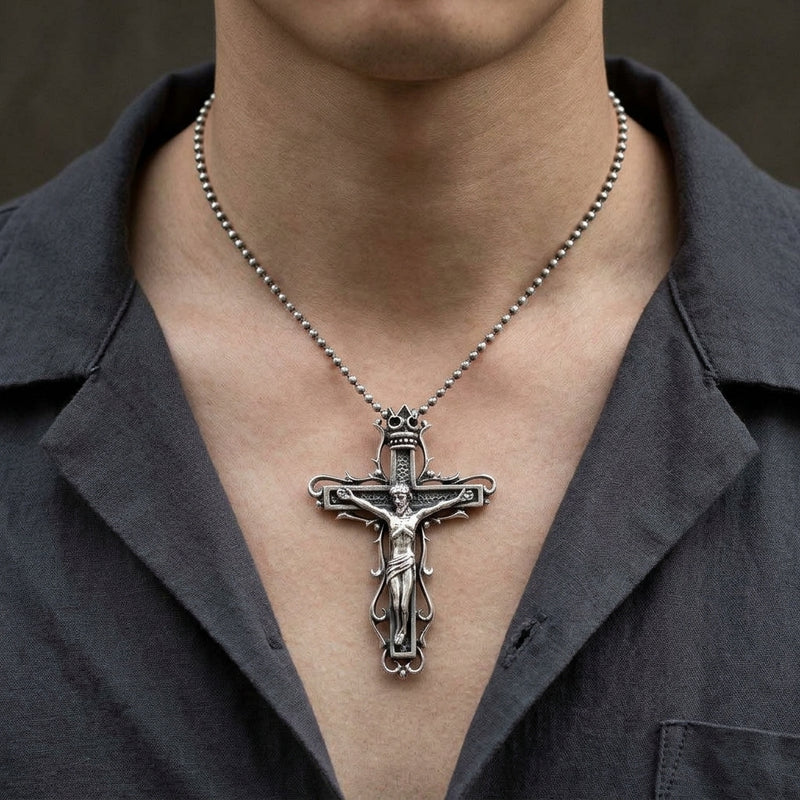
Gothic Cathedral Crucifix Sterling Silver Pendant
A sculpted figure of Christ with crown and thorn-like surrounding scrollwork.
View pendant details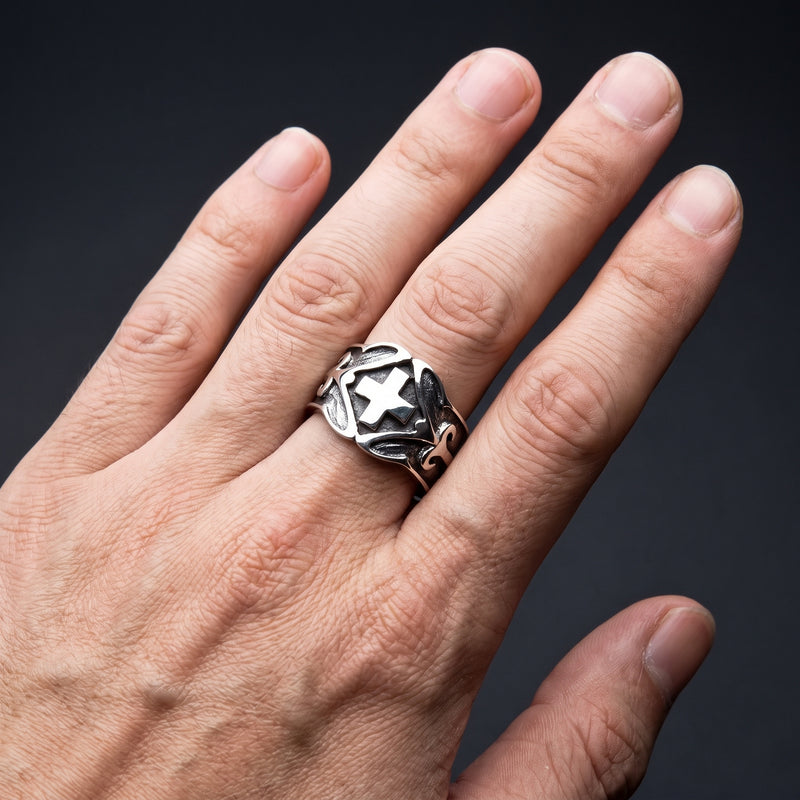
Celtic Cross Sterling Silver Band Ring
A plain central cross framed by leaf panels and scrolling relief.
View details and sizesIs a gothic cross Christian? What a design can and cannot tell you
The cross is used as a Christian symbol, and a crucifix represents Christ on the cross. Those associations matter when choosing a design. They still do not tell you an individual wearer’s reason for choosing it. You might be looking for an expression of faith, a design connected to a family keepsake, or a piece whose ornament appeals to you.
The product name cannot answer a personal question for you. If you are buying for someone else, ask whether they would prefer a crucifix, a cross without a figure, or another motif. Their preference is more useful than an assumption based on the word gothic.
A short checklist before you buy
- Center: is there a figure of Christ, making it a crucifix, or a plain cross?
- Frame: identify the scrolls, leaves, crowns or other decoration separately from the center.
- Label: read the product name as a style description, and look for documentation if historical origin matters to you.
- Pendants: confirm whether a chain is included, and check the pendant bail and chain end fittings.
- Rings: check the current size options on the product page.
When you are ready to compare more examples, browse our contemporary cross designs and apply the same reading: center first, ornament second, label third.

