

Gothic ring styles are easiest to compare by their main detail: a sculpted skull, a cross with scrollwork, or a dark stone held in a dramatic setting. Start with the design you want people to notice, then check the ring's width, weight and profile. The right choice should suit both your personal style and the way you plan to wear it.
These are practical ways to compare modern designs, and they often overlap. A dark-stone ring can also have ornate metalwork; a cross ring can be a broad band or a taller statement piece. Use this guide to narrow your preferences before exploring the gothic ring collection.
Compare the main gothic ring styles
| Style | What draws the eye | Check before choosing |
|---|---|---|
| Skull and skeletal | A recognizable sculpted motif and contrast between polished surfaces and dark recesses | Face dimensions, weight and how far the design projects |
| Cross and ornate band | A central symbol, surrounding relief and repeating details | Front width, side decoration and the shape of the rear band |
| Dark stone and claw setting | The stone's color, outline and the metal holding it | Actual stone identity, setting height and care requirements |
Skull and skeletal designs
A skull ring gives the hand an obvious focal point. Look closely at the expression: a broad grin, deep eye sockets and an angular jaw create a different impression from a small skull worked into a band. The detail matters as much as the overall size.
For a straightforward rocker look, try one sculpted ring with a plain dark outfit and leave some space around it. That is a styling option, not a rule about who can wear the design. Choose a motif because you like it or give it personal meaning; an appearance alone does not tell you what every wearer believes.

Cross designs and ornate bands
A cross can sit at the center of a ring while leaves, scrolls or other relief decorate the shoulders. Compare the actual outline and surrounding pattern rather than choosing by the style name alone. Different cross designs can have different personal or cultural associations, so avoid assuming that every version carries the same meaning.
The Celtic Cross Sterling Silver Band Ring in this guide has a raised plain cross, leaf-shaped panels and scrollwork. Its decoration concentrates on the front and shoulders, with a plainer rear section. This gives you two useful views to check: the part people see and the part that rests against the palm.
For another ornate motif, compare a fleur-de-lis shield ring with a scrollwork band; the guide separates face dimensions from band width.

Dark stones and claw settings
A dark center creates a strong contrast with bright metal. The stone's outline changes the look too: a rectangular face reads differently from a round or pointed design. Then consider the setting. Claws, carved shoulders and raised edges add another layer of detail around the center.
Check the product specification for the stone's actual identity. Color alone cannot establish whether a stone is onyx, glass, a synthetic material or something else. Gothicrock lists the example below as black onyx set in solid .925 sterling silver, with sculpted dragon claws and axe details. That specification applies to this product, not every black-stone ring.

Three designs to compare
These examples show how the choice changes from sculpted motif to decorated band to stone setting. The measurements below come from the current product specifications and are approximate. Open the product page to inspect all views and choose your size.
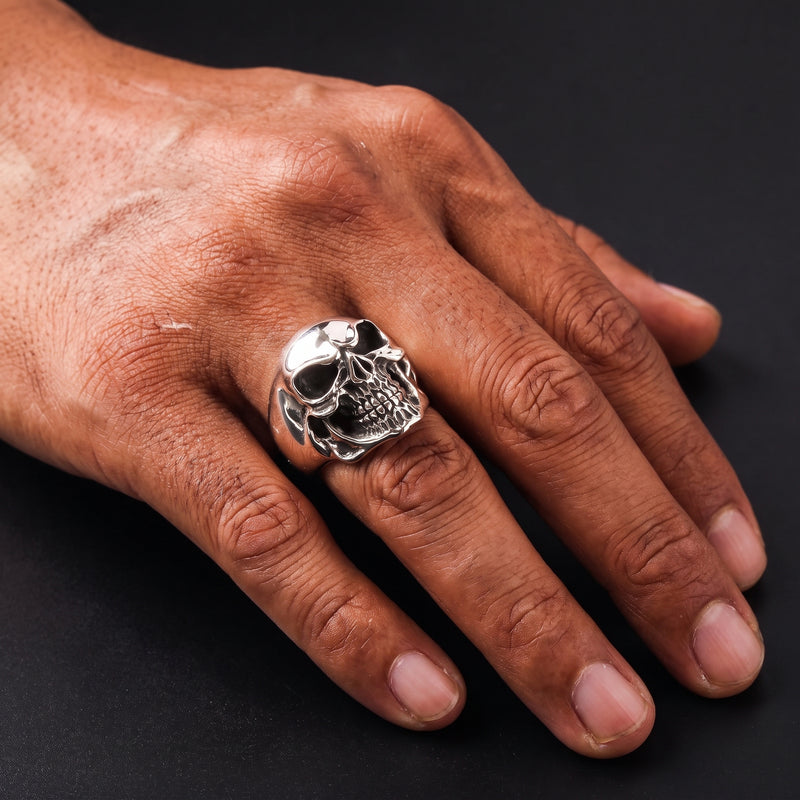
Laughing Skull Sterling Silver Biker Ring
A sculpted skull with an approximately 21 × 25 mm face and 27 g weight.
View details and sizes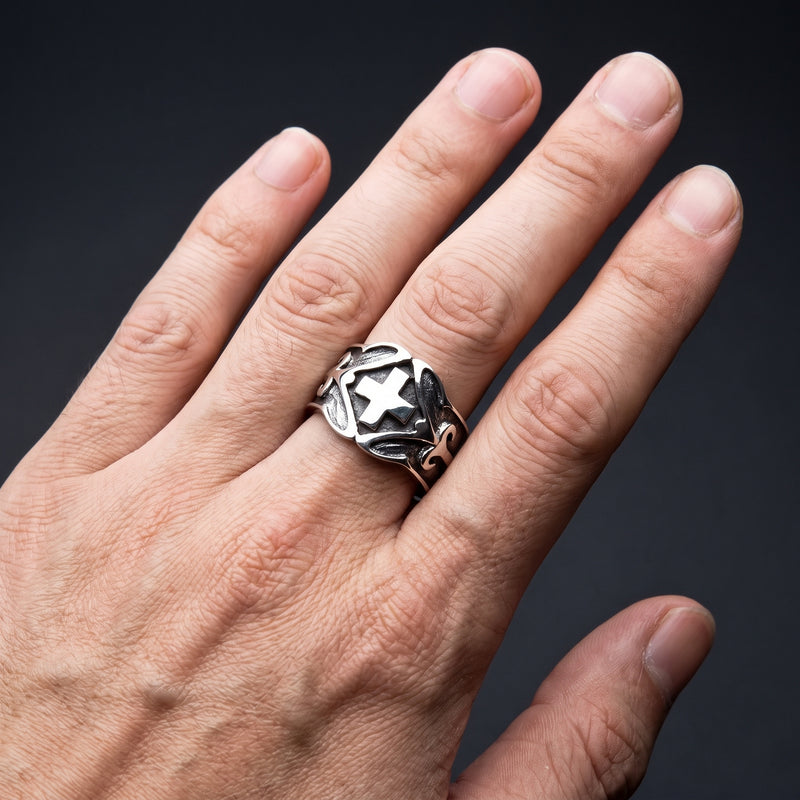
Celtic Cross Sterling Silver Band Ring
A raised cross and scrollwork across an approximately 13 mm front; about 13 g.
View details and sizes
Black Onyx Dragon Claw Sterling Silver Ring
A dark rectangular stone, sculpted claws and a substantial ring weight of about 36 g.
View details and sizesChoose a ring that works for you
Separate finger size from the size of the design
Your ring size describes the fit around the finger. It does not tell you how broad the face looks or how much the ring weighs. Compare those details separately: the front width, the height above the finger, the shape underneath and the stated weight.
Measure the finger you intend to use and check the size guide above. A broad band can feel different from a narrow ring, so do not apply a universal “one size larger” rule. If you are unsure, ask about the particular design before ordering or have the finger measured with a suitable ring sizer.
Check the space around the ring
When comparing a sculpted face with a flatter band, look at how much of the design extends toward the neighboring fingers. If you wear more than one ring, try bending your fingers and check whether adjacent pieces meet. Front dimensions and ring size answer different questions; inspect the side and underside views as well.
For choosing pendants or bracelets to go with an outfit, continue with our gothic jewelry styling guide.
Read the material and care details
Choose with maintenance in mind as well as appearance. GIA advises keeping jewelry away from household chemicals and notes that gemstones and treatments can affect which cleaning methods are suitable. It also recommends protective storage, including an anti-tarnish bag or cloth for sterling silver. See GIA's jewelry-care guidance and follow the instructions appropriate to your specific ring.
For a component-by-component care check, use our sterling silver and stones cleaning guide.
Your final checklist: pick the motif, compare the real dimensions, confirm the material and stone, choose the correct finger size, and review the product views. A useful style guide should make those decisions clearer.
Find your next gothic ring
Start with the style that caught your eye, then compare the details that matter when you wear it. Explore Gothicrock's gothic rings to see more designs and available sizes.
If movement is part of what you want, compare fixed steampunk detail with a rotating spinner band before choosing from the look alone.

