

Yes, you can wear silver, gold-colored and copper tones together in a dark outfit. The useful step is keeping two questions apart: what color a piece looks, and what it is actually made of. Start with the visible hardware you already wear, identify the jewelry's named components, then compare one hardware color at a time beside the same piece. The aim is to find an arrangement you like.
Start with the hardware already on you
Before choosing jewelry, look at what your clothes already contribute. Look for a jacket zip, jeans buttons, belt buckle, boot hardware or watch case against the dark fabric. Note what you see in plain color words, such as silver-colored, gold-colored, darkened or coppery, unless you have a specification that confirms the hardware material.
Then pick one region to work with rather than the whole outfit. The neckline and the hand are easy places to start: a pendant sits near collar buttons or a jacket zip, and a ring sits near a cuff zip or watch. Keeping the comparison to one region makes it small enough to judge by eye.
Color words and metal words are separate labels
Silver color and gold color describe appearance. Material terms say something else. The FTC’s guide to jewelry metal descriptions explains that sterling silver is 92.5% silver, that silver plate is only a surface layer, and that karat marks and terms like gold-plated or vermeil describe actual gold content or gold layers. Read .925 as a sterling-alloy description; a gold-colored finish alone does not tell you whether gold is present. Neither jewelry example below is listed as gold or gold-plated.
Brass names an alloy. CCI’s description of copper and brass notes that brass is a copper-zinc alloy; freshly polished copper looks reddish-orange, while polished brass is usually yellow but can sometimes look red. That’s why “brass” is a material name rather than a promise of one exact gold hue, and why a photo can’t confirm which alloy a small detail is.
Map the named components
Mixed-metal pieces get easier to style once you separate what the listing confirms from what your eye sees. The table below uses two pieces from our catalog. In both, .925 describes the stated sterling silver base, not its other metal components, and does not establish the silver percentage of the assembled item.
| Visible part | Listing-confirmed material | Wardrobe comparison to try |
|---|---|---|
| Cross Shield pendant: shield | Sterling silver (.925 base) | Wear it near a silver-colored zip pull, rivet or collar button first. |
| Cross Shield pendant: raised cross | Brass | Compare with a warm-colored jacket button beside the pendant. |
| Skull ring: base and skull relief | Sterling silver (.925 base) | Compare with a silver-colored cuff zip or watch case near the ring. |
| Skull ring: warm-metal mechanical details | Copper and brass details, listed collectively | Try a warm-colored zip or button near the hand. |
| Your zip, buttons or buckle | Not identified by color alone | Describe by color only, and compare one item at a time. |
The Cross Shield pendant gives you two clearly named components to compare: the silver shield and the brass cross. Their material names come from the listing, not a color test. On the skull ring, the seller describes the copper and brass details as a group without naming which gear, goggle rim or pipe is which, so the map stops there too. Relate hardware to what you see in your own light, and rely on the listing for what each part is made of.
One change at a time: the cuff zipper comparison
Here is the exercise in its simplest form. Both images below show the same tri-metal skull ring beside a black denim cuff. The comparison changes the zipper from silver color to muted gold color while keeping the ring, pose and black cuff visually consistent. These editorial treatments let you compare color relationships; the choice is yours.
A — Silver color

B — Gold color

In A, follow the pale silver areas of the skull toward the zipper, then look at the warmer goggle and pipe details. In B, follow those warm details toward the gold-colored zip. Which relationship do you notice first? You can prefer either arrangement without requiring every shade to match.
Choose the version you’d rather wear. You can repeat this without buying anything: use two hardware options you already own, such as watches or jackets, and photograph the same jewelry beside each in similar light. Keep other changes as small as practical. If you’re also weighing where accessories sit and how garment edges frame them, that’s a separate question, covered in our comparison of goth and punk accessory edges and placement.
Two mixed-metal pieces to try this with
The pendant pairs sterling silver with brass; the ring adds both copper and brass details to its silver base. Each gives you silver and warm tones to compare with nearby hardware.
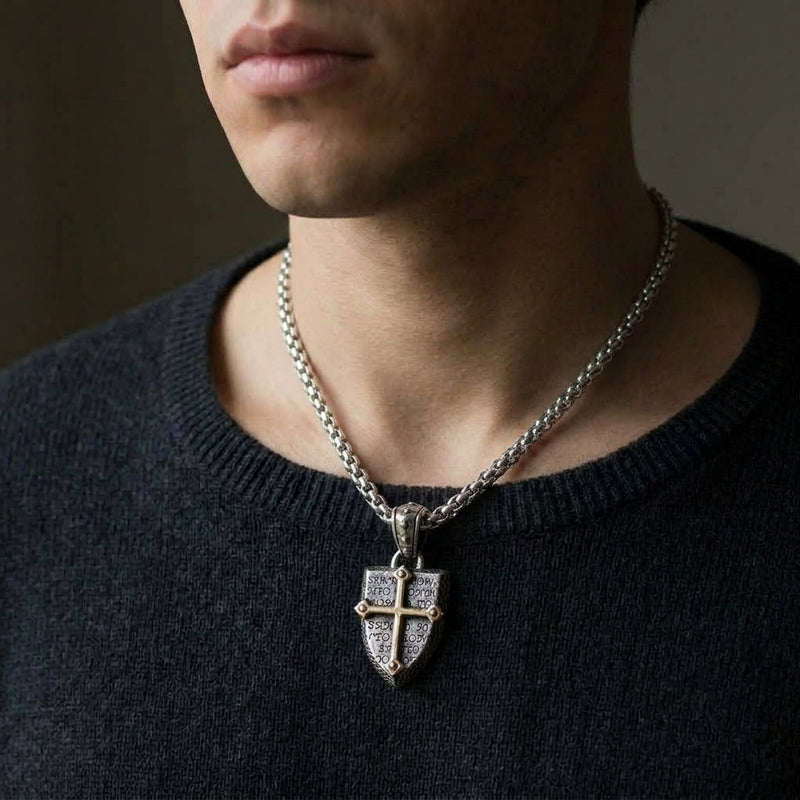
क्रॉस शील्ड स्टर्लिंग सिल्वर और ब्रास पेंडेंट
Sterling silver shield with a raised brass cross, for comparing silver-colored and warm neckline hardware.
View pendant details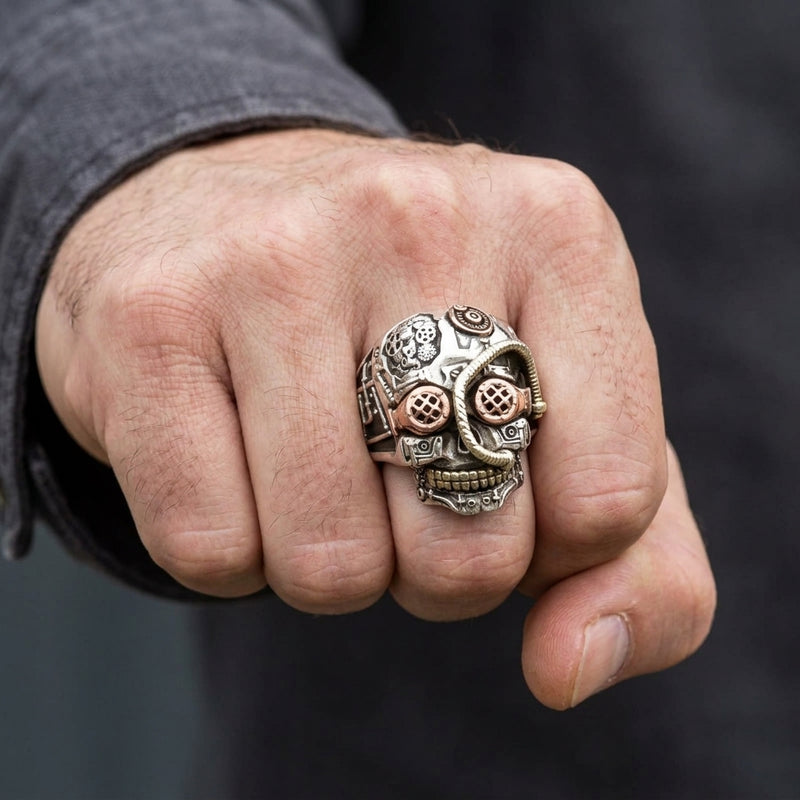
ट्राई-मेटल स्टर्लिंग सिल्वर स्टीमपंक स्कल रिंग
Sculpted silver skull with fixed copper and brass mechanical relief, for testing cuff and watch hardware. Fixed US sizes, not adjustable.
Check ring sizesIf you plan to hang the pendant on a chain you already own, check the bail opening against that chain and its end fittings, since the usable clearance isn’t stated. For the ring, confirm your size in the current size selector.
To start from a different shape, browse pendants and read each listing’s component labels, then compare them with the hardware you already wear.

